Dr Kelley Doocy
DVM, DACVIM (Cardiology)
Veterinary Cardiologist and Founder of VetCardio
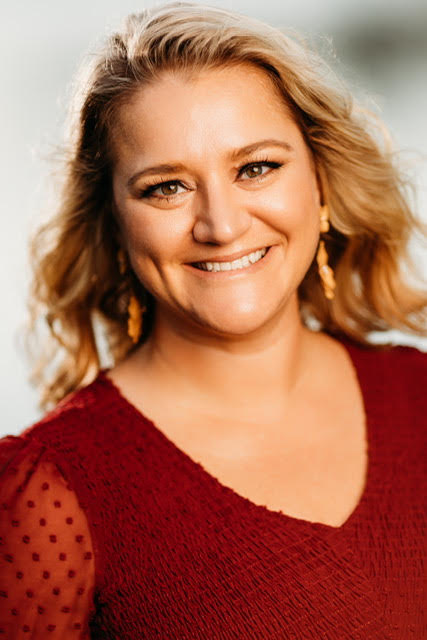
Dr Kelley Doocy is a board-certified veterinary cardiologist with experience spanning specialist hospitals, university settings, mobile cardiology, telemedicine and locum practice.
After earning her Doctor of Veterinary Medicine from Oklahoma State University in 2011, Kelley completed a small animal rotating internship in Sacramento, followed by specialist internships in cardiology in Los Angeles and emergency and critical care in Tucson. She then completed her cardiology residency at Texas A&M University and became a Diplomate of the American College of Veterinary Internal Medicine in Cardiology in 2017.
Kelley went on to work as a veterinary cardiologist in specialist practices in Southern California and South Florida. She later founded VetCardio, through which she provides cardiology telemedicine and locum services across the United States and Canada.
Her locum work has taken her into university hospitals, multidisciplinary specialist centres, cardiology-only practices and mobile cardiology services. This has given her a broad understanding of how cardiology is practised across different clinical environments, as well as the challenges faced by veterinarians working with different levels of equipment, support and specialist access.
Kelley has published four scientific papers, including three related to veterinary cardiology. Her research has explored patent ductus arteriosus morphology, multidimensional cardiac imaging and the use of real-time three-dimensional transoesophageal echocardiography during interventional procedures.
She has also presented cardiology research and continuing education on topics including electrocardiography, thoracic ultrasound, cardiac biomarkers, pulmonary hypertension, congenital heart disease and patent ductus arteriosus.
Kelley is particularly passionate about cardiac physiology and pathophysiology. She believes that understanding what is happening within the cardiovascular system allows veterinarians to make better decisions than simply following a standard treatment plan.
She finds end-stage heart failure especially rewarding because these patients often require highly individualised care. At this stage, adjusting medications becomes less about following a formula and more about interpreting each patient’s disease, diagnostic findings and response to treatment.
For Kelley, the goal is not only to teach veterinarians what to do. It is to help them understand why they are doing it, how treatment changes the underlying physiology and how to adapt when a patient does not respond as expected.
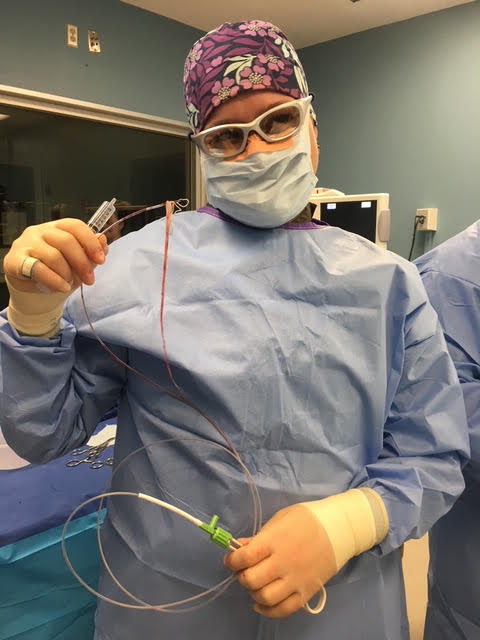
Kelley has mentored veterinary students, technicians, rotating interns, cardiology interns, cardiology residents and cardiac sonographers throughout her career.
Through her telemedicine work, she regularly helps sonographers across the United States and Canada improve their echocardiographic images and measurements. She works with them to obtain the information needed for an accurate diagnosis while helping them understand what they are seeing and why it matters.
Kelley believes mentorship has an impact far beyond the person being taught. When a veterinarian develops a stronger understanding of cardiac disease, that knowledge can improve both the quality and quantity of life of every cardiac patient they treat.
Get to Know Your Mentor
We asked Julia a few thoughtful (and a few fun!) questions to help you get to know her as both a clinician and a human. From her proudest career moments to the one piece of equipment she can't live without, this is your backstage pass into what drives her, how she works, and why she's excited to mentor other vets.
I genuinely enjoy every aspect of cardiology, from structural heart disease and electrophysiology to geriatric and paediatric patients, medical management and interventional procedures.
One of the unique things about veterinary cardiology is that we are not divided into as many subspecialties as human cardiology. We have the opportunity to work across all of these different areas, and I am incredibly grateful to have found a career that I feel so passionate about.
I find treating patients with end-stage heart failure especially fulfilling. At that stage, adjusting medications becomes more of an art. Treatment has to be based on the individual patient, their diagnostic results and their response, rather than following a cookie-cutter plan.
These cases require you to think deeply about the pathophysiology of the disease and how each treatment may change it. That is where cardiologists can have a significant impact on a patient’s long-term trajectory, and it is one of the parts of my work that I find most rewarding.
I love discussing the physiology and pathophysiology of cardiac disease, but at the centre of my passion for cardiology are always the patients.
We all chose veterinary medicine because we love animals. When I help another veterinarian or veterinary student understand cardiac disease and treatment more clearly, that knowledge can translate into a better quality and quantity of life for a beloved pet.
There is no greater reward than knowing that mentoring someone to make better decisions for a cardiac patient can make a difference not only for that pet, but also for the family who loves them.
Throughout my career, I have mentored veterinary students, technicians, rotating interns, cardiology interns and cardiology residents. I also work closely with cardiac sonographers through telemedicine, helping them obtain the best possible images and measurements while answering questions about what they are seeing.
Mentoring has been one of the most fulfilling parts of my career. I am excited to be part of a learning environment where mentorship is integrated into the course, because I believe that discussion and guidance can create a much deeper level of understanding than lectures alone.
There have been several.
During my cardiology internship, an English Bulldog presented with cardiac tamponade despite having only approximately one centimetre of pericardial effusion. I was able to perform the pericardiocentesis successfully and without complications, despite the small amount of fluid and the patient’s difficult anatomy. My mentor from that year still talks about the case.
Another occurred during my residency when I was called in to perform an echocardiogram on a 12-year-old dog. I identified what I believed was a left-to-right patent ductus arteriosus, which would be an extremely unusual finding in a dog of that age.
My mentor was understandably sceptical and came into the hospital to review the images with me. The dog did, in fact, have a PDA. Seeing the increased trust my mentor placed in my echocardiographic diagnoses and treatment plans after that case had a significant positive effect on my confidence.
Years later, while working as a locum at a university, I was asked to perform an echocardiogram on a horse. I had not scanned a horse in six years, and the patient had complex congenital heart disease. The horse later died, and the necropsy confirmed that my echocardiographic diagnosis had been completely accurate.
That experience reminded me that the skills and ways of thinking developed during specialist training remain with you, even when you have not used them in a particular species for some time.
Favorite: Giving pets back.
Least favorite: Delivering poor prognoses.
Biggest misconception: Murmur equals cough.
The first surgery I performed was microsurgery on mice before I had received surgical training in veterinary school.
My first exposure to veterinary cardiology was watching baboons undergo echocardiograms.
I originally planned to work in fish specialty medicine.
My echocardiography machine. It provides so much of the information we need to understand cardiac structure, function and blood flow. Mine also has ECG leads attached, so although it is not a replacement for a complete diagnostic ECG, it gives me access to both echocardiographic and rhythm information.
To me, work-life balance means working during work hours and allowing work to end when those hours are over.
I currently spend approximately six to seven months of the year combining clinical locum work with telemedicine. For the remainder of the year, I work through telemedicine while travelling with my family.
We live in an RV and travel across the United States, moving between locum positions and exploring as many outdoor places as we can along the way. We have travelled through all 48 contiguous states and visited the national parks within them.
When I am not in a clinic, you are most likely to find me hiking, paddleboarding, biking with my family, visiting a museum, chasing my children around a playground or stopping at one of my husband’s unusual roadside attractions.
Some of our stops have included the Idaho Potato Museum, a pencil sharpener museum, the smallest church in the United States and the world’s largest bobblehead.
One of my most memorable patients was a Schnauzer named Kelly.
He already had Stage C degenerative valve disease when I met him and later developed an acquired patent foramen ovale secondary to his disease. Unexpectedly, this communication helped him and taught me a great deal about haemodynamics, blood flow and the pathophysiology of valve disease.
Kelly remained in Stage D heart failure for 11 months before he passed away. At that point in my career, he was the longest-surviving Stage D patient I had treated. Much of my interest in managing end-stage heart disease came from what I learned through his case.
Another memorable patient was a cat named Mia who had been referred for atrial fibrillation. When we examined her, she was significantly bradycardic, and Holter monitoring showed that she required a pacemaker.
The morning after her pacemaker procedure, her heart rate suddenly increased to approximately 400 beats per minute. It sounded like a butterfly was inside her chest.
Mia had both a bradyarrhythmia and a tachyarrhythmia, an unusual combination in a cat. Because the pacemaker protected her from becoming dangerously bradycardic, we were able to use medication to control the tachycardia.
That case taught me to remain curious rather than sceptical when information in a patient’s history conflicts with findings during a single examination. This is particularly important with intermittent arrhythmias and auscultation abnormalities in cats.
Becoming a Diplomate of the American College of Veterinary Internal Medicine in Cardiology is my proudest professional achievement.
I am also extremely proud of founding and running my own business. VetCardio has allowed me to support patients and veterinary teams across different locations and models of practice while creating a career that reflects the way I want to work and live.